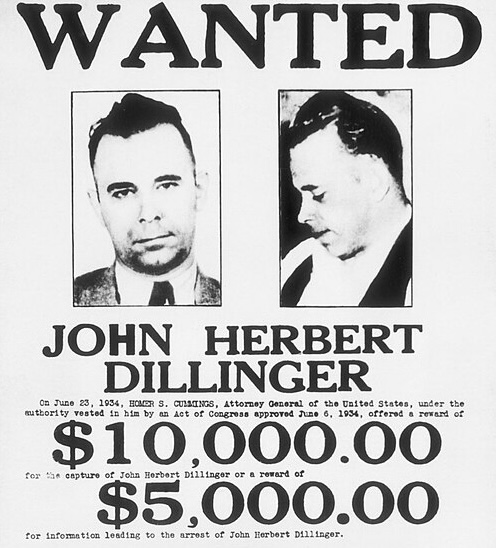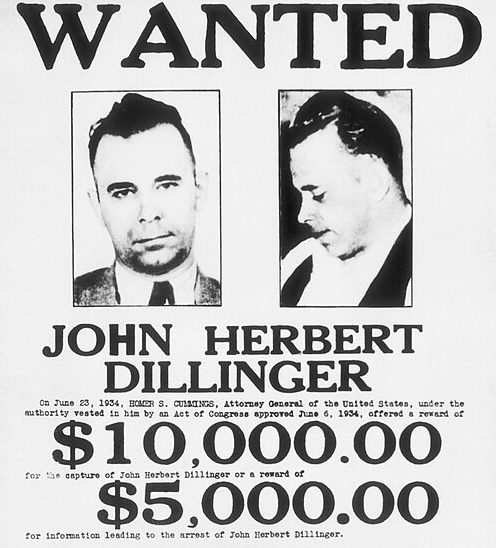
In thirteen months, John Dillinger transformed himself from inconsequential ex-con to the most famous criminal celebrity in US history and the first Public Enemy Number One.


Podcast: Play in new window | Download
Subscribe: RSS
In thirteen months, John Dillinger transformed himself from inconsequential ex-con to the most famous criminal celebrity in US history and the first Public Enemy Number One.
Podcast: Play in new window | Download
Subscribe: RSS
In thirteen months, John Dillinger transformed himself from inconsequential ex-con to the most famous criminal celebrity in US history and the first Public Enemy Number One.


Podcast: Play in new window | Download
Subscribe: RSS
The books used to compose this podcast included: “Dillinger,” by Dary Matera, and,
“Public Enemies,” by Bryan Burrough.
The intro music used in this podcast is: “Downtown Metropolitan Chase,” by Aaron Kenny, and, the outro music used is: “Standoff,” by Density and Time.
Soviet spies who betrayed the secret of the A-Bomb or innocent victims framed by Cold War hysteria, legal corruption and anti-Semitism? Over seventy years later the debate rages on.

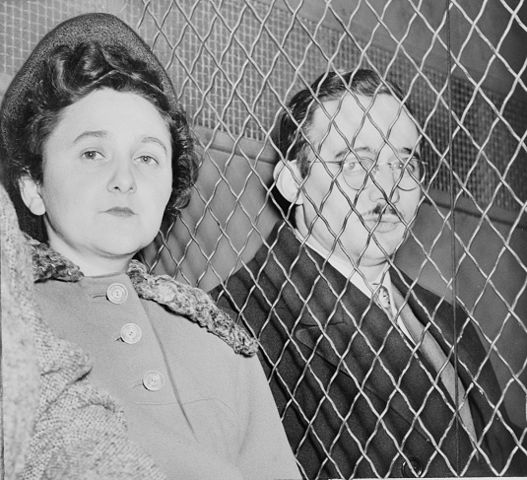
Julius and Ethel Rosenberg began their lives as two of the most unlikely individuals to ever acquire their eventual high profile notoriety. Julius’ immigrant father, Harry, worked in the Garment District, providing his family with a better than average income that allowed the Rosenbergs to live a lifestyle marginally better than many of their Lower East Side counterparts. His mother, also an immigrant from Eastern Europe was an illiterate homemaker who took care of Julius and his four siblings. Quite serious, even as a teenager, Julius was a good enough student to consider rabbinical studies. A high school graduate at 16, he eventually settled on engineering, enrolling at the City College of New York. Politically aware, he also became active in several associations associated with the Communist Party, especially the Young Communist League.

Ethel Greenglass came from a similar Lower East Side background as her eventual husband, her father working in the sewing machine repair shop on the ground floor beneath the family apartment. Three years older than Julius, they met as a result of their political interests and involvement in the Young Communist League. Ethel was an aspiring actress and singer from a young age and was preparing to perform on New Year’s Eve, 1936, at a union benefit that Julius also attended. After an introduction from a friend, Ethel agreed to Julius’ request to walk her home and from then on, the couple was inseparable.

David Greenglass’ testimony against his own sister and brother-in-law, which even he admitted later was disingenuous and coached by the federal government, was lethal to the Rosenbergs.

Only a minor player in the Rosenberg spy ring, the FBI and US Government threatened the Greenglass’ if they did not cooperate and help with the prosecution of their own relatives.

David Greenglass’ random assignment to the highly sensitive Manhattan Project to construct a nuclear weapon placed him in proximity to information that was of interest to his brother-in-law, Julius Rosenberg

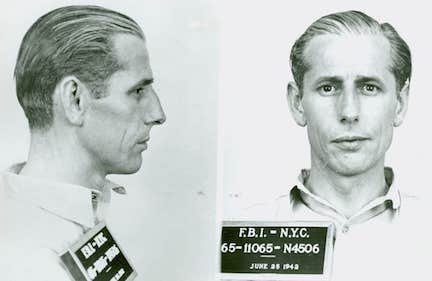
Fuchs’ arrest and testimony led the FBI to both Harry Gold and eventually the Rosenbergs. He was sentenced to fourteen years in prison, served nine and was released. He then emigrated to East Germany, and worked on weapons research until his eventual retirement as a highly decorated Communist hero.

Harry Gold was a Soviet espionage agent and courier who interacted between David Greenglass and Klaus Fuchs. He testified against the Rosenbergs, received a thirty year jail sentence and was released after serving approximately fifteen years. He worked as a hospital pathologist and died in 1972.

Although a recreation, this piece of evidence was crucial to demonstrating the tradecraft and espionage capabilities of Julius Rosenberg. Harry Gold presented one half of the box to David Greenglass to introduce himself and demonstrate that he was sent by Julius Rosenberg. The Jell-O box used at the trial is now in the National Archives.
Podcast: Play in new window | Download
Subscribe: RSS
Soviet spies who betrayed the secret of the A-Bomb or innocent victims framed by Cold War hysteria, legal corruption and anti-Semitism? Over seventy years later the debate rages on.

Sobell was a co-defendant of the Rosenbergs and claimed to be an innocent victim of a government frame-up. He eventually admitted that he had passed secrets to the Russians and that Julius Rosenberg was an espionage agent. But, he also claimed that Ethel Rosenberg was not part of the conspiracy. Sobell spent almost eighteen years in prison before his release and death in 2018, age 101.

Other federal defendants who were transported to court with the Rosenbergs mention their deep devotion and affection for each other despite harrowing circumstances.

Feklisov was the case officer who coordinated the espionage ring involving Klaus Fuchs, Harry Gold and Julius Rosenberg. Feklisov was named the Washington, DC station chief in 1960 and played a prominent role in resolving the Cuban Missile Crisis.

After Justice Douglas permitted a last minute stay of execution for the Rosenbergs, the entire court was reconvened in a highly unusual session which vacated Douglas’ ruling. The Rosenbergs were executed only hours later.

Considered one of several villains in the Rosenberg case, Saypol, a federal prosecutor, eventually served on the New York State Supreme Court, a promotion that was perceived as a reward for his role in the prosecution and execution of the Rosenbergs.

Over ten thousand people crowded outside of the funeral home in Brooklyn where the Rosenbergs memorial was held. The couple were buried on Long Island as many cemeteries in their native New York City refused to allow their burial.
Podcast: Play in new window | Download
Subscribe: RSS
The books used to compose this podcast included:
“The Rosenberg File: A Search For The Truth,” by Ronald Radosh and Joyce Milton.
“Ethel Rosenberg: An American Tragedy,” by Anne Sebba.
“The Brother,” by Sam Roberts.
The music used in this podcast included in order: “69 Bronco,” “The Sound of a Dollar,” “The Loner,” (all by DJ Williams) and “Before I Go,” by RKVC
The true story of eight nazi spies who landed on American shores via U-Boat at the height of WWII

George John Dasch was born on February 7, 1903 in Speyer, Germany, the fifth of thirteen children. His mother, a social worker and quite influential at critical moments of his life, implored him at the age of thirteen to enter a seminary in preparation for the Catholic priesthood. Dasch was expelled a year later and then served briefly in the German Army at the conclusion of World War I, lying about his age to facilitate enlistment. Post war occupation by American troops resulted in Dasch’s fascination with emigrating to the United States and his employment on the docks of Hamburg allowed him to eventually stow away on a merchant ship bound for Philadelphia. There, he avoided detection and blended into the neighborhood, getting a menial job within days of his arrival in October of 1922. Determining that he might have more success within the large German ex-pat community in New York, Dasch quickly headed north.

All eight men were outfitted with American style civilian clothes, fake identity papers and presented with eight wooden crates containing waterproof stainless steel receptacles packed tightly with plastic explosives, detonators, and timers. Dasch and Kerlin as team leaders were given additional training in invisible ink composition and composed handkerchiefs covertly containing contact names for reliable friends and relatives in the US. Dasch and Kerlin were also each given approximately 85,000 dollars.

Upon arrival, Dasch was confined to a hotel with other newly arrived German nationals where he was rigorously interviewed by officials intent on determining the exact motivation for his return. Among these interviewers was a man named Walter Kappe, who grilled Dasch in English to assess how well the he spoke the language. After Dasch lied to him about employment in an import-export company and demonstrated language proficiency, Kappe gave him his card, indicating that he was an editor of a magazine and encouraged him to interview for a position. Dasch was polite, but was anxious to visit his family and explore other less nebulous options via family connections.

Hitler no longer had to worry about that consequence, and he began to berate Abwehr chief Wilhelm Canaris, to implement the Fuehrer’s concept of a massive covert attack on America, both destroying American industrial capability and fomenting a home grown fifth column of resistance within the German-American community.


By then, the four saboteurs were nowhere near Amagansett, although their exit from eastern Long Island contained some precarious moments. Dasch was vaguely familiar with the area and recognized the general location of Amagansett from his days living in New York, but he still had no clear direction for the village or railroad depot. The men were savvy enough to get away from the beach as quickly as possible and still under the cover of darkness, they were able to quickly access the main road in the area, the Montauk Highway. Wandering in a northerly direction and careful to avoid any homes or brightly lit areas, they were especially alarmed by the sound of the U-boat diesel engines they heard as they stealthily tried to extricate themselves from the beach vicinity. When a large campground forced them to walk in a circuitous manner, they stumbled over some railroad tracks. Dasch correctly headed west and within a mile they reached the Amagansett train station. At five o’clock on a Saturday morning, it was locked and deserted. All four men got rid of any wet clothes and tried to make themselves as presentable as possible. At six AM, the station opened and Dasch bought four tickets to New York, the first train leaving at 6:59. The four men were the only passengers to board at Amagansett and within minutes they were rapidly leaving the Hamptons behind, incredibly relieved to have successfully completed one of the most challenging parts of their mission. Heinck even shook Dasch’s hand, acknowledging his leadership in guiding them out of danger.
Podcast: Play in new window | Download
Subscribe: RSS
The true story of eight nazi spies who landed on American shores via U-Boat at the height of WWII.


Podcast: Play in new window | Download
Subscribe: RSS
The following books were used in the production of this podcast:
“Saboteurs, The Nazi Raid on America,” by Michael Dobbs.
“Betrayal, The True Story of J. Edgar Hoover and the Nazi Saboteurs Captured During WWII,” by David Alan Johnson.
“Eight Spies Against America,” by George Dasch.
“They Came To Kill,” by Eugene Rachlis.
The intro music used for both Parts one and two is: “A Guy Walks Into A Bar,” by Asher Fulero.
The music at the end of part one is “Fall Of The Dynasty,” by Asher Fulero.
The music at the end of part two is “Desert Catharsis,” by The Whole Other.