The house used in the film “Butch Cassidy and the Sundance Kid,” in which Katherine Ross lives and Paul Newman rides a bicycle during the song “Raindrops Keep Falling ON My Head.”
Entrance to the Hole In the Wall near Kaycee, Wyoming
Location near Durango, Colorado where Newman and Redford jump into the river to escape the Lefors posse
Historical marker denoting the site of Fort Worth’s Hell’s Half Acre.
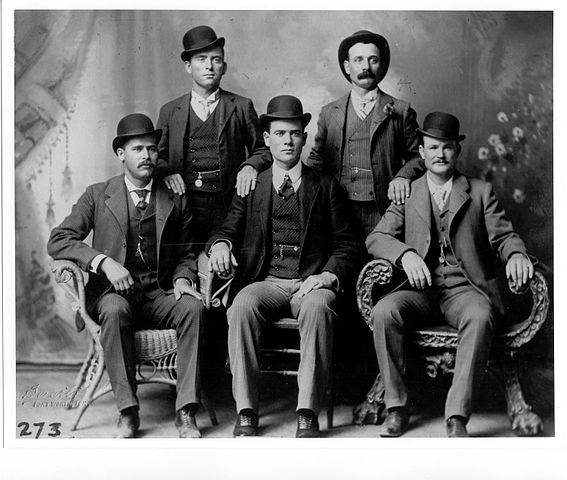
In 1969, the 20th Century Fox film, “Butch Cassidy and the Sundance Kid,” established these two outlaws as popular culture icons. But what was the truth about the lives, crimes and deaths of these two American legends?
Discover the true story of Butch Cassidy and the Sundance Kid, beyond Hollywood’s portrayal. This episode uncovers the real-life adventures of these infamous outlaws, from their humble beginnings to their daring train robberies. Learn how Robert Leroy Parker became the legendary Butch Cassidy, his friendship with the Sundance Kid, and the formation of the Wild Bunch. Explore the Old West’s most notorious gang, their hideouts, and the relentless pursuit by lawmen and Pinkerton agents. Unravel the mysteries surrounding their fate and separate fact from fiction in this thrilling historical journey. Perfect for history buffs, true crime enthusiasts, and anyone fascinated by the legends of the American frontier.
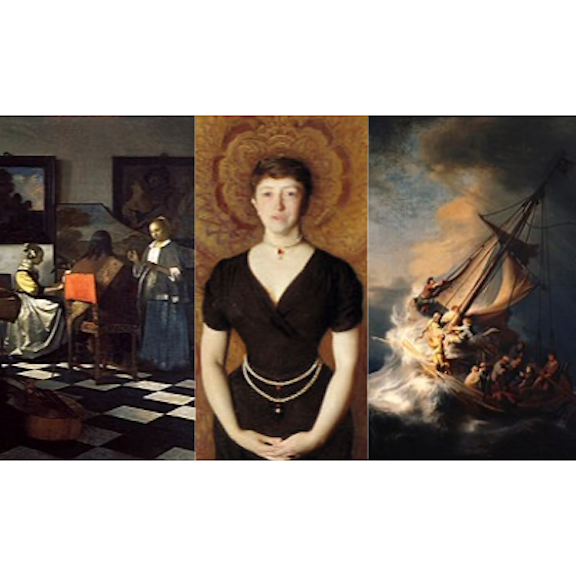
Discover the fascinating life of Isabella Stewart Gardner, a trailblazing art collector and socialite who left an indelible mark on Boston’s cultural landscape. This episode delves into Gardner’s journey from New York socialite to renowned art patron, her creation of the iconic Isabella Stewart Gardner Museum, and the shocking 1990 heist that rocked the art world. Learn how Gardner’s unconventional personality and passion for art shaped her legacy, and uncover the mysteries surrounding the largest unsolved art theft in history. Perfect for history buffs, art enthusiasts, and anyone intrigued by untold stories of influential figures. Don’t miss this captivating tale of wealth, culture, and intrigue in early 20th century America.
Isabella Stewart Gardner
John Lowell (Jack) Gardner Jr.
Bernard Berenson in his Italian villa.
Botticelli, The Tragedy of Lucretia
Rembrandt, Storm on the Sea of Galilee
Rembrandt, Self-Portrait, damaged, not stolen.Titian, Rape of Europa
Discover the fascinating life of Isabella Stewart Gardner, a trailblazing art collector and socialite who left an indelible mark on Boston’s cultural landscape. This episode delves into Gardner’s journey from New York socialite to renowned art patron, her creation of the iconic Isabella Stewart Gardner Museum, and the shocking 1990 heist that rocked the art world. Learn how Gardner’s unconventional personality and passion for art shaped her legacy, and uncover the mysteries surrounding the largest unsolved art theft in history. Perfect for history buffs, art enthusiasts, and anyone intrigued by untold stories of influential figures. Don’t miss this captivating tale of wealth, culture, and intrigue in early 20th century America. Like, subscribe, and explore more episodes of bite-sized biographies that bring forgotten legends to life.Gardner Museum security guard, Rick Abath
Myles Connor, later in life.
William Youngworth III, Late 90’s.
Robert “Bobby” Donati, as a young man
Isabella Stewart Gardner, 1907
Gardner Museum, 1920
Robert Gentile
Ryan McGuigan
One of the three searches of Robert Gentile’s property
Recent photo of the original Gardner building
Recent photo of Gardner 2012 addition.
Isabella Stewart Gardner, 1922, by John Singer Sargent
Gardner Family Mausoleum, Mt. Auburn Cemetery, Cambridge, MA
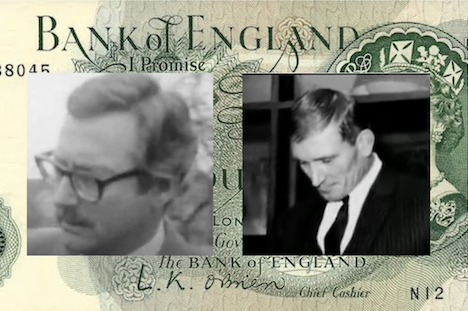
In 1963, two British criminals masterminded the robbery of 2.6 million pounds in cash from a Royal Mail Train, an amount worth 45 million pounds today. The robbery and its aftermath caused a nationwide sensation.
In 1963, two British criminals masterminded the robbery of 2.6 million pounds in cash from a Royal Mail Train, an amount worth 45 million pounds today. The robbery and its aftermath caused a nationwide sensation.
Detective Tommy Butler
Leatherslade Farm
Judge Edmund Davies, entering court
Plaque at Crewe railroad station commemorating Jack Mills and David Whitby
Charmain Biggs, in later years
Gordon Goody, later years
Grave of Bruce Reynolds, sculpted by his son Nick, Highgate Cemetery
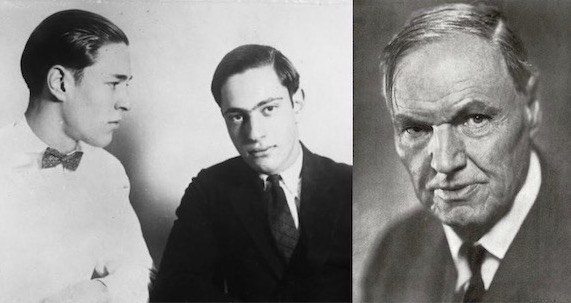
Long before Claus Von Bulow or OJ Simpson, in 1924, two Chicago teenagers committed what was called at the time, “The Crime of the Century,” only to be spared by the efforts of the greatest defense attorney in American history.
Nathan Leopold
During their scouring of the Wolf Lake area, police detectives questioned the game warden of the forest preserve that was located nearby about any recurring visitors to the location. One of the names he revealed was that of Nathan Leopold, Jr a nineteen year old ornithologist and recent Phi Beta Kappa graduate of the University of Chicago, currently taking a class at the University of Chicago’s law school. On Sunday morning, May 25, two policeman were sent to Leopold’s home to pick up the teenager for questioning, the house coincidentally in the Kenwood section near both the Harvard School and Bobby Franks’ house. Leopold had plans for a date that Sunday and was initially resistant to coming down to the precinct, but the police assured him that their captain just wanted to ask some routine questions and if he brought his car he would be back in no time.
Richard Loeb
Once Richard Loeb’s name was mentioned he also was brought to the LaSalle, placed in a separate room and questioned until the early morning hours. He claimed he left Leopold around dinnertime and mentioned nothing about picking up girls, an obvious contradiction that was certainly suspicious. The next morning, Leopold and Loeb found themselves in custody, in separate police stations, Leopold at Crowe’s headquarters in the Criminal Courts Building, Loeb at a nearby precinct house.
Bobby and Jacob Franks
At the Franks’ house, as the dinner hour approached, Bobby Franks’ parents began to wonder where their son was. Jacob and Flora Franks were the type of typically wealthy family that populated the Kenwood neighborhood. Jacob Franks’ wealth initially stemmed from a pawn shop he inherited from his parents known as Franks Collateral Loan Bank. Franks eventually diversified his business interests, first into separate watch and watch case manufacturing companies and then into various real estate and stock investments which generated a net worth of at least 1.5 million 1924 dollars, equivalent to about 27 million dollars today.
Graves of Bobby and Jacob Franks
Because of the incredible public and media interest generated by the death of Bobby Franks, the Franks family decided to hold a small, private funeral service in their home as opposed to what might become a public circus. The Franks family were converts to Christian Science from Judaism and the affair consisted of various readings and hymns before a police escort accompanied the Franks procession to Rosehill cemetery, the pallbearers all fellow students from the Harvard School.
Clarence Darrow
Understanding his nephew’s predicament, Jacob Loeb decided to reach out to an even more prominent individual, Clarence Darrow. By 1924, Darrow was nearing the conclusion of one of the most illustrious and controversial legal careers in US history. Starting from a small law practice in the tiny Ohio town of Andover, Darrow eventually made his way to the city of Chicago where he became famous and frequently vilified for representing various labor officials like Eugene Debs and Big Bill Haywood. A 1911 scandal involving a Los Angeles bombing case which resulted in Darrow negotiating a plea deal and accusations of jury tampering via bribery alienated the attorney from organized labor. Darrow then switched to criminal and civil defense, mostly involving defendants facing the death penalty. In over 100 cases, Darrow had only one defendant executed and that was when he joined the defense only for the penalty phase of the trial. Despite a practically disheveled appearance, Darrow’s quick legal mind and remarkable eloquence during impassioned closing arguments made him the most famous trial lawyer in America.