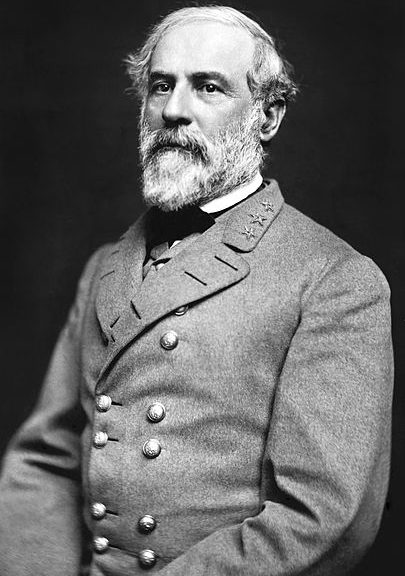
Robert E. Lee, Stuck in the MIddle (Part 1)

Robert E. Lee, Valiant Hero or Misguided Traitor?

Robert E. Lee, 1845, With Son

Robert E. Lee was born on January 19, 1807.  He was the son of Henry Lee III and Anne Carter, Henry and Ann’s fifth child.

Robert E. Lee’s Wife And Daughter

Lee was initially assigned to assist in the construction of a fort on the Savannah River, 12 miles from the city of Savannah, Georgia itself.  But construction was unsuccessful and it would be sixteen years before Fort Pulaski was completed.  Long before that, Lee would be fortuitously reassigned to Fort Monroe, near present day Hampton, Virginia.  He visited Mary Custis at her family home, Arlington House, which overlooked the Potomac and Washington, DC.  Lee’s initial proposal to Mary Custis was accepted by her and her mother but her father, George Washington Parke Custis, the adopted son of George Washington and the grandson of Martha Washington was initially opposed.  Not only was Robert E. Lee from a family with limited financial resources, “Light Horse” Harry Lee’s questionable business practices had brought the hint of scandal to the entire Lee clan.

Thomas J. (Stonewall) Jackson, Photo Taken Only Weeks Before His Death

From a leadership perspective, Lee would also be forced to face the reality of the loss of Stonewall Jackson.  Initially thought to be able to recover from his gunshot wounds inflicted by friendly fire, Jackson contracted pneumonia and died on May 10.  Lee was uncharacteristically emotional in a letter to his son, Custis: “It is a terrible loss. I do not know how to replace him.  Such an executive officer the sun never shone on.  I have but to show him my design and if it can be done, it will be done.”

Lee and Jackson Commemorative Stamp, With Lee’s Ancestral Home, Stratford Hall

Both of Lee’s parents emanated from two of Virginia’s most aristocratic families.  Henry Lee III was a Revolutionary War cavalry officer who earned the nickname “Light Horse” for his equestrian ability during combat.  His mother’s family lived at Shirley, one of the oldest and most profitable tobacco plantations in the state of Virginia.  At the time of their marriage, Henry Lee was Virginia’s governor and would also serve the state as a member of the US House of Representatives.  However, by the time of Robert E. Lee’s birth, his father had suffered significant economic setbacks forcing the family to abandon the Lee ancestral home of Stratford Hall.

Share This

Robert E. Lee, Stuck in the Middle (Part 2)

Robert E. Lee: Valiant Hero or Misguided Traitor?

Arlington House, Occupied By Federal Troops, 1864

George Parke Custis was kicked out of Princeton, left St. John’s College of Annapolis after only one semester and made a living renting out all of the various plantation properties that he had inherited.  By comparison to the industrious and spartan Robert E. Lee, Custis was an indolent patrician who lived on the wealth of his ancestors. Eventually, understanding that his daughter was enthusiastic about marrying Lee, Mary Custis’ father agreed to the marriage of his only child, which took place at Arlington House on June 30, 1831.

Robert E. Lee and His Horse, Traveller

Lee immediately realized that the attack was not only a failure but a disaster.  On his horse Traveller he is said to have galloped forward and greeted his defeated troops by saying “It is my fault.”  Of Pickett’s 6,000 men, 3,000 were casualties including all 15 regimental commanders.  Other units suffered similarly bringing casualties to approximately 6,500 suffered in less than an hour.  Lee quickly became concerned that Meade might follow with a counterattack but when he ordered General Pickett to prepare his division for such an eventuality, Pickett is said to have replied, “General Lee, I have no division.”

Robert E. Lee, by Matthew Brady

Lee’s disappointment in his defeat at Gettysburg was so profound that he submitted his resignation to Jefferson Davis.  Lee indicated that he was to blame for the loss at Gettysburg and he questioned whether he could continue to meet the physical demands of military command.  Davis emphatically rejected Lee’s offer of resignation, telling him that replacing would be an impossibility.

Mary Lee, In Old Age

Lee did not live long enough to observe the post war reality of race relations, especially in the southern United States, but, based on the attitudes that both he and his wife expressed during their lifetime, he would not have found them problematic.

Washington and Lee University Commemorative Stamp

General Lee not even sure as to what he would do with the rest of his life.  He was 58 years old but other than the military he had no other occupation.  He must have considered it fortunate when the rector of Washington College in Lexington, VA offered him the presidency of the school.  Besides a salary which included a percentage of tuition, Lee was promised a residence.  In exchange he would administer the school and be asked to teach a course in philosophy.  Robert E. Lee accepted the position.

Robert E. Lee Chapel on the Campus of Washington and Lee University

In late September, Lee prepared for the beginning of Washington College’s 1870-1871 academic year.  On September 28, at a meeting of the directors of his local church, Lee’s last official act was to agree to make up the remaining $55 of the rector’s salary out of his own pocket.  He walked home and when he got to the dinner table, he was unable to lead his family in grace or even speak at all.  They sat him down and called a doctor, Lee clearly afflicted by some traumatic event which turned out to be a massive stroke.  Robert E. Lee lingered for two weeks, lying quietly in a bed in the main room of his home surrounded by family.  He died quietly on October 12, 1870, aged 63.  His glorification began immediately with a name change of Washington College to Washington and Lee University, Lee having initiated both law and business schools as part of the school’s curriculum.

View From Arlington House Today

Robert E. Lee will always remain a complex and fascinating figure of historical prominence.  Hopefully, the pendulum which initially swung too far in favor of insensitive adulation will eventually swing back from strident, out of context vilification to a more sensible middle ground

Share This

Robert E. Lee, Stuck in the Middle (Book and Music Information)

Two books were essential during the recording of this podcast: Robert E. Lee: A Biography by Emory M. Thomas

Also, Lee: The Last Years, by Charles Bracelen Flood

Music used during the intro and outro included:

The Return To War, by The Art Of Escapism

And:

In Shadows, by William Ross


Share This

Herman Melville, From Obscurity to Immortality (Part One)

Herman Melville: From obscurity to immortality

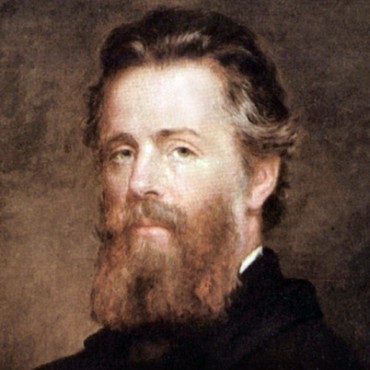
Herman Melville, 1861

When he died at age 72, on September 28, 1891, Herman Melville was so obscure that those who even remembered his literary output presumed that he had passed away many decades earlier.  Melville’s works were out of print, his last novel published more than thirty years before his death.  The title of his epic work Moby Dick was misspelled in Melville’s New York Times obituary and one of his most respected efforts, “Billy Budd, Sailor,” had not even been published.

Elizabeth Shaw Melville, Melville’s Wife

Despite the initial Shaw family misgivings about how their future son-in-law would make a living as a writer, Herman Melville and Elizabeth Shaw were married in Boston, in August of 1847.  They became permanent residents of New York City and the writer spent the next few years grinding out a succession of books.

Nathaniel Hawthorne

Packing off his family to his in-laws in Boston, in October, 1856, Melville first set out for Glasgow and then Liverpool and a meeting with his friend, now diplomat, Nathaniel Hawthorne.  Their reunion was friendly even warm but Hawthorne’s journal entries, while empathetic, depict Melville as a conflicted, lost soul.

Share This

Herman Melville, From Obscurity to Immortality (Part Two)

Herman Melville: From Obscurity to Immortality

Melville’s Massachusetts Home-Arrowhead

Over forty, Melville need not be concerned with actually having to fight for the Union but in 1863, he and his wife decided to move back to New York City, exchanging Arrowhead, which he was unable to sell, for his brother Allan’s East 26th Street home.

Herman Melville, Last Photograph, Mid-1880’s

Throughout this time period, Melville continued to toil away at his custom’s officer’s job.  When he began working at the Customs House in 1866 he took a horse drawn streetcar to work.  By the 1880’s, so much time had passed that Melville took the Third Avenue El, an elevated railway, to his office on the Upper East Side.

Elizabeth Shaw Melville, Later In Life

Melville would remain in this position until his resignation on December 31, 1885.  By that time, his wife had inherited a considerable amount of money from an aunt and other relatives, enough to allow Herman to retire.

Share This

Herman Melville, From Obscurity to Immortality (Book and Music Information)

Much of the material for this podcast came from:

Herman Melville: His World And Work, by Andrew Delbanco

Also: Herman Melville A to Z: The Essential Reference To His Life And Work

Music selections for this podcast included:

Erik Satie: Gymnopedie Number 3, by Kevin MacLeod 

and

Waltz of the Renegade by Art of Escapism

Share This

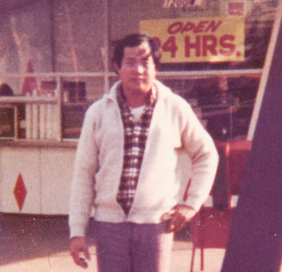
Ted Ngoy, The Donut King Of Southern California

Ted Ngoy, the ultimate American Dream, including donuts

Ted Ngoy’s First Donut Shop, La Habra, California

Eventually, in 1976, one of Ted’s customers showed him an ad in the local newspaper, the Orange County Register, advertising a donut shop for sale.  Ngoy had meticulously saved 20,000 dollars, the seller financed the rest of the $45,000 purchase price.

Ted and his wife, Suganthini, with Richard Nixon

By 1985, Ted was a millionaire and a very respected member of the Cambodian community.  He and his wife moved into a 7,000 square foot home in Mission Viejo and Ngoy became active in the Orange County Republican Party.

Ted Ngoy in Cambodia, 2017

Most media accounts of Ted Ngoy end sometime around 2014.  It’s hard to keep up with an individual so far away from the western press, even in the age of the internet. But, judging from his Facebook page, he is alive and surviving quite well. His “photos” page features him, a man in his seventies, with a much younger and beautiful woman who he began dating when she was in her teens.  Judging from the photo they seem quite happy.

Share This

Ted Ngoy, The Donut King Of Southern California (Book and Music Information)

The information for this podcast came from two articles:

“Dunkin’ and the Donut King”, November 2, 2014, California Sunday Magazine.

“Dunkin And The Donut King”

Also, “From Sweet Success To Bitter Tears”, January 9, 2005, Los Angeles Times.

“From Sweet Success To Bitter Tears”

The music played during the intro and conclusion is “Why”,  by McNorman.

“Why” by McNorman


Share This

Frida Kahlo, Her Life and Remarkable Work (Part 1)

Frida Kahlo, Mexican icon

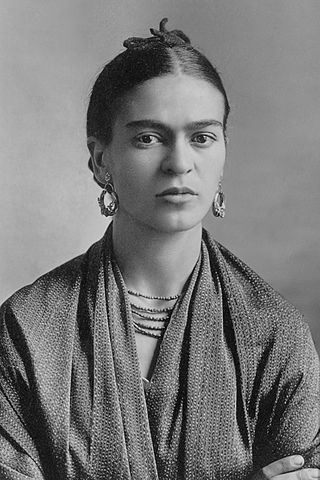
Frida Kahlo Photographed By Her Father

Magdalena Carmen Frieda Kahlo Calderon was born on July 6, 1907 in Coyoacan, Mexico. Today, Coyoacan, officially a borough of the Federal District, is part of the urban sprawl of Mexico City.  But when Frida was born it consisted of open space, farm and ranch land.  Although her birth probably occurred at her grandmother’s house, Frida would spend her childhood and much of her life living in the Casa Azul, the blue house built by her father in 1904. Carl Wilhelm Kahlo was born in Germany and emigrated to Mexico in 1891, when he was nineteen, his Hungarian father, a wealthy jeweler, paying for his passage.

Frida and Diego Rivera

Known during her lifetime as merely the wife of Diego Rivera, Frida Kahlo subsequently ascended to artistic prominence and popular culture fame in her own right, becoming a worldwide social and political icon. Her sickly childhood, painful existence, tortured relationship with Rivera and brief life provided a tragic backdrop to her artistic accomplishment, now recognized as unique and transcendental.  She remains so revered in Mexico that her works have been designated as national heritage objects, prohibited from foreign export.  Internationally, she is now perceived as one of the most important and original artists of the twentieth century.

La Casa Azul

La Cas Azul, Frida Kahlo’s ancestral home.

Frida and Diego Rivera’s House With Separate Residences

In early September, Frida got a telegram from her family back in Mexico City informing her that her mother was seriously ill, her breast cancer now entering a terminal stage.  Accompanied by her American friend Lucienne Bloch, she was forced to take trains and even a bus over the flooded Rio Grande back to the Mexican capital, an arduous journey that took five days.  One week after her arrival, her mother died, leaving her father in a state of grief and confusion.  She would remain in Mexico for a month to grieve with her family and also check on the house that was being built for her and Diego.  Her prospective home would have a bridge that connected two separate wings of the structure, one for her and one for him.

Share This

Frida Kahlo, Her Life and Remarkable Work (Part Two)

Frida Kahlo: Mexican Icon

Trotsky In Mexico

Since the death of Lenin in 1924, a power struggle over not only over the Soviet government but also the international Communist movement ensued with the winner Josef Stalin and the loser Leon Trotsky.  But Stalin was not content with merely expelling Trotsky from the party and the country.  His megalomaniac paranoia would subsequently require the physical extermination of his opponent, including Trotsky’s family.  Many of Trotsky’s relatives, including his first wife and children would be imprisoned, exiled or executed.  Initially expelled by Stalin, Trotsky himself fled first to Turkey, then France, where he was initially offered asylum but subsequently rejected and ultimately Norway, which also eventually deported Trotsky to Mexico

Trotsky’s Study And Assassination Location, Mexico City

In the winter of 1939, Frida would be reintroduced to a Trotskyite sympathizer named Jacques Mornard.  While in Paris, Mornard, who lived in the French capital at the time, claimed that he was moving to Mexico City and aggressively asked her to help secure him a home near hers and an introduction to Leon Trotsky.  She refused, explaining that she and her husband had had a falling out with Trotsky and suggested he find a residence on his own.  Mornard eventually made his way to Mexico, accompanied by his American girlfriend, Sylvia Ageloff, a trusted member of Trotsky’s inner circle.  It would take months, but Mornard, who routinely dropped Sylvia off at the Trotsky compound and did small favors for the entourage eventually ingratiated himself into obtaining a personal meeting with the Soviet exile.  Ostensibly, Trotsky was to review a political article that Mornard had written.  In the late afternoon of August 20, Leon Trotsky ushered the younger man into his study and began to read his work.  Unfortunately for Trotsky, Jacques Mornard was actually Ramon Mercader, a specially recruited Stalinist assassin who took an ice axe from underneath his rain coat and plunged it into Trotsky’s skull.  Although the blow did not immediately kill Leon Trotsky, he would die of his injuries within 24 hours.

Frida Painting In Bed

Most of the rest of the decade would be consumed by painting, teaching and attempting to find solutions for the various ailments that plagued her which included a chronically infected hand, her right foot which was troublesome and restrictive, a deteriorating spinal column that was also overwhelmingly painful and even possible syphilis that was diagnosed in the early forties.  However, it would be during this time period that Frida would paint some of her most quintessential works.

Frida’s Four Poster Bed, Frida Kahlo Museum

Frida’s degenerative spinal condition would begin to require surgery and a succession of casts designed to allow her mobility.  She would fly to New York in May of 1946 for surgery that would fuse four vertebrae with bone and a metal rod.  Returning to Mexico, she would be placed in a steel corset and remain bedridden for eight months.

Frida’s Life Mask, Frida Kahlo Museum

Frida Kahlo celebrated her 47th and last birthday on July 6, 1954.  Drawings and notations in her diary indicate that however it would arrive, she knew the end was near.  Officially, she would die sometime in the early morning of July 13, from what a doctor officially noted as a “pulmonary embolism.”  Wracked by pneumonia, in constant and excessive pain only dulled by massive amounts of opiates, this certainly would not be a far-fetched prognosis.  However, on the evening before her death she insisted on giving Diego Rivera an anniversary present, despite the fact that their anniversary was a month away.  Later, her nurse would claim that Frida intentionally exceeded the number of painkillers she was supposed to take.  Her final diary entry was both ominous and revelatory:

            “I hope the exit is joyful-and I hope never to come back.”

La Casa Azul Today, Frida Kahlo Museum
Share This

Of Some Very Famous People You've Never Really Heard Of…In Less Than An Hour.